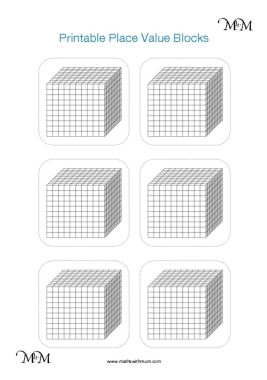
Regrouping Explained

Regrouping Explained
videolesson.JPG

Regrouping units, tens, hundreds and thousands in maths

  • Regrouping means to exchange 10 of a particular place value column for 1 of the next place value column along.
  • 10 individual ones (units) regroup to make 1 ten.
  • 10 individual tens regroup to make 1 hundred.
  • 10 individual hundreds regroup to make 1 thousand.
  • Regrouping is needed when there is 10 or more in any place value column of a number.
  • Regrouping in addition is called carrying.
  • Regrouping in subtraction is called borrowing.

Every ten in a place value column can be regrouped and carried to the next column.

10 ones can be regrouped to make a ten, 10 tens can be regrouped to make a hundred and 10 hundreds can be regrouped to make a thousand.

videolesson.JPG

Teaching Regrouping in place value with ten ones regrouped to make one ten

  • Regrouping is needed when there is 10 or more in any place value column of a number.
  • We count ten ones and regroup them into a ten.
  • We carry this ten over from the units column into the tens column.
  • There are ‘3’ ones remaining in the units column so we write a ‘3’ here.
  • There are ‘3’ groups of ten so we write a ‘3’ in the tens column.
  • There is ‘1’ group of one hundred in the hundreds column so we write a ‘1’ here.

Regrouping Explained

What is Regrouping in Maths?

Regrouping is the process of exchanging values between the place value columns of a number. Explained simply, regrouping is moving digits from one place value column to another.

We regroup in groups of ten when moving between the ones, tens, hundreds and thousands place value columns.

For example:

  • 10 individual ones (units) can be regrouped as 1 ten.
  • regrouping ten ones as a ten

    Ten Units regrouped to make one Ten

    • 10 individual tens can be regrouped as 1 hundred.
    • regrouping ten tens as one hundred

      Ten tens regroup to make one Hundred

      • 10 individual hundreds can be regrouped as 1 thousand.

      ten hundreds regrouped to make one thousand

      Teaching Regrouping

      When teaching regrouping numbers it is useful to first show this concept using physical manipulatives, such as place value blocks (sometimes called Base 10 blocks, Dienes blocks or Multibase Arithmetic Blocks).

      This lesson uses base ten blocks to teach regrouping and it might be useful to work along with us using your own base ten blocks. If you do not have base ten blocks, you can download and print some along with a base ten place value chart above.

      When starting to teach regrouping it is easiest to begin by regrouping units to tens.

      Start with a collection of units (ones) base ten blocks and some tens rods. We can count the number of blocks in each ten rod to see that there are 10.

      We will take some units blocks in the example below and see if we can regroup some as a ten.

      Base 10 example of regrouping ones as tens

      We can line the blocks up and count until we make ten.

      Remember that 10 individual one cubes can be regrouped as a single ten rod.

      Regrouping the ten individual ones as a 10 rod, we have three left over.

      10 + 3 = 13

      Regrouping physical objects can make it easier to count them.

      It is easier to see that we have 3 more than 10 when we have 1 tens rod and the 3 one cubes left over.

      We will look at a regrouping example to practise regrouping 10 tens as a hundred. Again it is useful to try this yourself, using a collection of tens rods and hundreds flats (if you do not own Dienes blocks, remember that you can print some above).

      Here are a group of tens rods. We will regroup some of the tens as hundreds.

      Base 10 regrouping tens as hundreds example

      We can count the tens rods until we get to 10.

      10 tens rods can be exchanged for a one hundred flat base ten block.

      Once the 10 tens have been regrouped as a one hundred, there are 5 tens remaining.

      We have 100 (from the hundreds flat piece) plus another 5 tens.

      100 + 50 = 150.

      Again, it is easier to count these tens now that they have been regrouped. We can see that there are only 5 tens more than one hundred. Regrouping makes it easier to count.

      Now we will look at how regrouping is used to move between place value columns.

      When teaching regrouping numbers it is useful to represent the numbers on a place value chart with base ten blocks.

      Here is an example of regrouping on a place value chart.

      Remember that regrouping is used whenever there is more than 9 in a place value column.

      Looking at the chart below, there are more than 9 ones (units).

      teaching regrouping strategies by regrouping ones as tens

      We can circle 10 of these units. When teaching regrouping with base ten block images, a strategy is to use a pen or pencil to circle groups of ten.

      We take these ten unit blocks away and replace them with a single ten rod, which is worth the same. However since it is a ten rod, it belongs in the tens column.

      regrouping the ten ones into a single ten shown with dienes blocks

      Here is the complete regrouping process.

      Base 10 Regrouping units as tens example on a place value chart

      To see the value of the number, we write down the number of blocks in each place value column.

      133 shown in place value columns using base ten blocks

      We have 133 made up of ‘1’ hundred, ‘3’ tens and ‘3’ ones.

      Here is another example of regrouping numbers on a place value chart.

      Looking at the units column, there are 6 ones.

      We need ten or more to regroup so we do not regroup these.

      what is the value of the number shown in base ten blocks?

      In the tens column we have circled a group of ten rods.

      We will regroup 10 tens as 1 hundred.

      We remove the circled tens from the chart and replace them with a hundred flat, which is placed into the hundreds column.

      example of regrouping tens as hundreds on a place value chart

      We now read the number of blocks in each column of the place value chart.

      5c

      We have 346 represented by these base ten blocks.

      Base 10 Regrouping tens as a hundred example on a place value chart

      Regrouping in Addition (Carrying) and Subtraction (Borrowing)

      Regrouping is needed in both addition and subtraction. It is important to teach regrouping because it is necessary for understanding written methods of addition and subtraction. It is particularly the case for adding or subtracting numbers that contain more than 1 digit.

      When performing addition, regrouping is often called carrying. Carrying is regrouping up through the place value columns, moving from units to tens to hundreds.

      When performing addition, regrouping is used when the addition produces a digit larger than 9 in a place value column.

      Here is an example of carrying / regrouping in addition.

      carrying regrouping in addition

      When adding 38 + 16, we start by adding the ones (units) column.

      8 + 6 = 14, which has two digits.

      We write down the ‘4’ in the units but carry the ‘1’ over to the tens column using regrouping.

      carrying regrouping in addition units

      We add this carried ten as part of the tens column addition.

      3 + 1 + 1 = 5

      carrying regrouping in addition tens

      And so, 38 + 16 = 54.

      In subtraction, regrouping is called borrowing. Borrowing is regrouping down through the place value columns, moving from hundreds to tens to units.

      When performing subtraction, borrowing is used when the digit being subtracted is larger than the digit being subtracted from.

      Here is an example of borrowing / regrouping in subtraction.

      We have 36 – 18. The 8 is larger than the 6 and so we need to use regrouping.

      borrowing regrouping example looking at the units

      1 of the tens is worth 10 ones. We can borrow a ten from the ‘3’ and it becomes a ‘2’. We can now write this ten in the ones column. Adding 10 to 6, we get 16.

      borrowing units regrouping example 2

      16 – 8 = 8

      And we can subtract the tens column now.

      2 – 1 = 1.

      borrowing regrouping full example

      36 – 18 = 18

nextlesson.JPG

Now try our lesson on 2-Digit Column Addition where we learn how to do 2-digit addition using the column addition method.

Place Value with Base Ten Blocks (MAB / Dienes Blocks)

Place Value with Base Ten Blocks (MAB / Dienes Blocks)
videolesson.JPG

Base Ten Dienes Blocks Names and Values Display Poster

What are the base 10 blocks worth? units, tens and hundreds mab blocks.

  • Base 10 blocks are also called Dienes blocks, Multibase Arithmetic blocks (MAB blocks) or Place Value blocks.
  • The four types of base ten blocks are named units, rods, flats and cubes.
  • The unit cubes are worth 1, the long rods are worth 10, the flats are worth 100 and the cube blocks are worth 1000.
  • The blocks are called base ten because ten of each block can be replaced with another, larger block.
  • Base 10 blocks are used for teaching place value, regrouping and they can be helpful for teaching volume.
  • Base 10 blocks are often used to teach place value by placing them inside a blank place value chart.

Base Ten Blocks are used to teach place value and represent numbers physically.

Units are worth 1, Rods are worth 10, Flats are worth 100 and Cubes are worth 1000.

videolesson.JPG

How to represent numbers using base 10 blocks and a place value chart.

  • The base ten blocks are used to represent numbers by grouping them into place value columns on a blank place value chart.
  • There are 2 flat blocks in the hundreds column, so we can write a ‘2’ digit.
  • There are 3 rod blocks on the tens column, so write a ‘3’ digit.
  • There are 5 unit blocks in the units/ones column, so write a ‘5’ digit.
  • These base ten blocks are used to model the number 235.

videolesson.JPG

Teaching Place Value using Base 10 / Dienes / MAB Blocks

Representing and Modelling Numbers using Base 10 / Dienes / MAB Blocks

practiseqs.JPG

Base Ten / Dienes / MAB Block Interactive Activities

Representing and Modelling Numbers using Base Ten Blocks: Interactive Questions

Base Ten Blocks (MAB / Dienes) Interactive Manipulatives

Base Ten Blocks Printable Place Value Worksheets

Base Ten Blocks Manipulatives and Teaching Printables

Using Base Ten Blocks (MAB / Dienes) Blocks to Teach Place Value

What are Base 10 Blocks?

Base ten blocks are also known as Dienes blocks, Multibase Arithmetic Blocks (MAB Blocks for short) and Place Value blocks.

Base 10 blocks are objects that are used to represent Units (Ones), Tens, Hundreds and Thousands. They are made up of small cubes.

There are four types of base ten blocks, which are called the unit block, the rod, the flat and the cube block.

The names of the base ten blocks shown as a display poster

The smallest value is one cube unit block, which is worth 1.

a unit block base ten block dienes cube worth 1

A row of ten unit cubes are joined together to make a rod.

using dienes base ten blocks to teach regrouping of 10 units into a ten

ten unit cubes join to make a rod in mab block place value

The rod (or long) is worth 10.

a rod base ten dienes block worth 10 in place value

Ten rows of these rods can be joined together to make a flat sheet of 100 unit cubes.

regrouping ten 10 rods in base ten blocks to build a hundred flay MAB block

regrouping ten tens in place value mab blocks to make one hundred

The flat is worth 100.

a flat dienes block worth 100 in place value blocks

Ten flats can be joined together to make a cube block.

Base 10 Block 1000.png

The cube block is worth 1000. This is the MAB base ten block with the largest value.

Below is a printable teaching poster that may be useful for teaching the Dienes block values.

Dienes blocks (or MAB blocks) are also called base 10 blocks because they follow our number and place value system. This system is called the base ten system because the numbers are built from 10 different digits: 1, 2, 3, 4, 5, 6, 7, 8, 9 and 0. This means that each place value column works in groups of ten. The value of each place value column is ten times greater than the one to its right. We could also say that the value of each place value column is ten times smaller than the one to its left.

Base Ten Dienes Blocks Poster display for teaching

Why are Base 10 Blocks Important?

Base 10 blocks are a useful way to enable children to visualise numbers and to see how they relate to each other in our number system. Base ten Dienes blocks are a physical manipulative that children can used to build and represent numbers. The advantage of Dienes blocks is that they can easily represent larger numbers when compared to other manipulatives such as counters.

MAB base ten blocks allow children to see how ten unit blocks in the units column can be replaced with one ten rod, which we can then move into the tens column. This helps children to build a stronger understanding of the regrouping process which is used in addition and subtraction.

How to use Base 10 Blocks to Represent, Model and Build Numbers

Base ten MAB blocks can be used to represent numbers by placing them in groups onto a blank place value chart. The number of each types of base ten block is the same as the digits of the number being represented.

When teaching base ten place value, it is best to start with the units column and work through the columns looking at larger and larger numbers.

Here are some unit cube MAB blocks used to represent the first few counting numbers.

Base 10 MAB blocks used to represent the numbers 1 to 5

Here are 3 unit blocks.

representing and building the number 3 with base ten unit blocks

Units are the smallest value of the Dienes blocks and we put these three blocks in the units column of the place value chart.

3 unit base ten blocks on the units place value chart

The 3 units are simply worth 3.

Here is an example of drawing the number 6 with base ten blocks.

draw the number 6 with base ten blocks example

Which number is represented by the base ten block image example below?

4 ten rod base ten mab dienes blocks

We put the Dienes blocks onto a blank place value chart. The rods are worth ten and so they belong in the tens column.

4 tens rods shown in a place value chart using base ten blocks to teach place value

The number drawn in the image above contains 4 rods in the tens column. We write a ‘4’ in the tens column.

There are no blocks in the units column and so we put a ‘0’.

We have 40 represented with the base ten blocks.

Here are some examples of numbers drawn in base ten blocks for you to work out the value of.

30 drawn with base ten dienes blocks

We have 3 ten rods drawn as base ten blocks.

3 tens are worth 30.

These MAB base ten blocks are worth 30.

Here are some Dienes rod blocks drawn on a place value chart. What is the value of these blocks?

50

We have 5 ten rods. 5 tens are 50.

We will now try drawing numbers with base ten blocks.

Try drawing 500 using base ten blocks.

Looking at the digits from right to left, we have ‘0’, ‘0’ and ‘5’.

We need ‘0’ units, ‘0’ tens but ‘5’ hundreds. We pick up 5 of the hundred flats.

building the number 500 drawn with base ten blocks

5 hundred flat Dienes blocks are worth 500.

What is the value of the MAB base ten blocks shown in the following place value chart?

Base 10 8.gif

We have 7 hundred flat MAB blocks.

7 hundreds are worth 700.

We can write this number with a 7 in the hundreds column because there are 7 separate Dienes blocks in the hundreds column.

We write a zero in the other columns because there is nothing in them.

We will now look at some examples of drawing and modelling numbers that are built from more than one type of base ten block.

What is the 3-digit number represented by this set of base ten blocks?

representing 3-digit numbers using base ten blocks

We count the number of MAB blocks in each place value column.

In the hundreds column we have 2 blocks.

In the tens column we have 3 blocks.

In the units / ones column we have 5 blocks.

The number represented by these base ten blocks is 235.

building the number 235 using base ten blocks

Here is another example of modelling a number using Dienes bas ten blocks.

representing the number 428 using base ten place value blocks

There are 4 hundred flats, 2 ten rods and 8 unit cubes.

The number that has been built is 428.

place value blocks used to build the number 428

We will now try drawing the number 890 using place value blocks.

Looking at the digits from right to left, 890 contains ‘0’ unit blocks, ‘9’ tens rods and ‘8’ hundred flats.

Base 10 blocks used to draw the number 890

building the number 890 using dienes blocks on a place value chart

What number is drawn using the Dienes base ten blocks shown?

Base 10 blocks to represent and model the number 607

There are ‘7’ unit blocks, ‘0’ tens rods and ‘6’ hundred flats.

We have 607.

607 modelling using place value blocks

We have a printable place value chart for teaching place value using base ten blocks to work along with all of these examples.

What are some other uses for base 10 blocks?

Base 10 blocks are useful when introducing addition and subtraction using written methods such as column addition. They can help to visualise the size of the numbers and are a useful teaching tool for introducing these topics.

Our lessons using place value blocks for teaching addition and subtraction can be found at:

Place value blocks are also useful for understanding the regrouping process used in addition and subtraction. Regrouping with base 10 blocks has been seen already where we exchange 10 units for a tens rod or 10 tens rods for a one hundred flat piece.

Base 10 blocks can also be used to introduce volume. The unit cubes can be used to show the unit value (simplest value), which would be one centimetre cubed (cm3). These can then be used to show how they can be combined to make different sizes of cubes, cuboids or other abstract shapes. The volume of the new shape can be found by counting up the total number of cubes.

nextlesson.JPG

Now try our lesson on Regrouping with Base Ten Blocks where we learn how to regroup using base ten blocks.

How to Write a Ratio as a Fraction

How to Write a Ratio as a Fraction
videolesson.JPG

example of converting a ratio into a fraction

  • The sum of the parts in the ratio is the
    denominatorThe number on the bottom of a fraction, below the line.
    of our fractions.
  • 4 + 2 = 6, so the denominators of both fractions will be 6.
  • The separate parts in the ratio make the
    numeratorsThe number on the top of a fraction, above the line.
    .
  • On one side of the ratio we have 4 and the other side is 2, so our numerators are 4 and 2.
Each side of our ratio makes up the numerators on top.

Add the numbers in the ratio to get the denominators on the bottom. .

videolesson.JPG

how to convert a ratio into a fraction example with 11 counters

  • We have 5 blue counters to 6 purple counters.
  • We write the counters in a ratio of 5:6.
  • 5 + 6 = 11, so the denominator on the bottom of the fractions will be 11.
  • We have 5:6, so we have 5 as one numerator and 6 as the other.
  • 5:6 can be written as two fractions   5 / 11   and   6 / 11  .

practiseqs.JPG

Converting Ratios to Fractions Worksheets and Answers

Converting Ratios to Fractions

How to Write a Ratio as Fractions

To write a ratio as fractions, add the total parts in the ratio to find the denominators and write each part of the ratio as the individual numerators.

When writing ratios as fractions, the number of fractions that are formed is the same as the number of parts in the ratio.

Here is a step-by-step guide to writing a ratio as a fraction:

  1. Count the number of different terms in the ratio to find the number of fractions that will be made.
  2. Add the different terms in the ratio to find the denominator that will be written on the bottom of all of the fractions.
  3. Write each individual term of the ratio as the numerator for each of the separate fractions.

Here is an example of converting a ratio to two fractions.

In this example, there are 4 blue counters to 2 purple counters. The counters are in a ratio of 4:2.

a ratio of 4 to 2 counters

There are two terms in the ratio, 4 and 2. Therefore, we can write this ratio as two separate fractions: the fraction of counters that are blue and the fraction that are purple.

The first step in writing this ratio as a fraction is to add the two parts in the ratio to find the denominator, which is the number on the bottom of the fraction.

We add together the number of blue counters and the number of purple counters.

4 + 2 = 6

So, the denominator of each fraction is 6.

adding the parts of the ratio 4 to 2 counters give fractions out of 6

The denominator tells us the total number of items in the ratio. In this example it tells us the total number of counters.

Next, we will find the fraction of the total counters that are blue.

According to the ratio 4:2, four of the counters are blue. This means that four out of six counters are blue. We take the 4 from the ratio and write it as the numerator on top of the fraction.

Therefore, the fraction of counters that are blue is   4 / 6.

4 parts out of 6 parts in a ratio is a fraction 4 out of 6

Now, we’ll find the fraction of counters that are purple.

If we look at the ratio, we can see that two of the counters are purple. This means that two out of the six counters are purple. We take the 2 from the ratio and write it as the numerator of the fraction.

Therefore, the fraction of counters that are purple is   2 / 6.

the ratio 4 to 2 converted to two fractions out of 6 width=

example of writing a ratio as fractions

The sum of the parts in the ratio tells us the denominator of the fractions.

Each part in the ratio tells us the numerators of the fractions.

To write a ratio as a fraction in its simplest form, add the parts of the ratio to form the denominator, write the individual parts of the ratio as the numerators and then divide the numerators and denominators of the fraction by the same amount if possible. Only divide the numerators and denominators if they can be divided exactly to produce a whole number.

The fractions that are formed from this ratio can be simplified by dividing both the numerators and denominators by 2.

The fraction   4 / 6   can be simplified to   2 / 3  and the fraction   2 / 6  can be simplified to   1 / 3 .

Here is another example of converting a ratio to a fraction.

We have boys and girls in a ratio of 5:8. We want to write the fraction of the total amount that are boys and the fraction of the total amount that are girls.

example of converting a ratio into a fraction

We follow the steps as before.

5 + 8 = 13, so the denominators on the bottoms of the fractions will be 13.

We then put 5 and 8 as the numerators on the tops of the fractions.

5 / 13  of the people are boys and   8 / 13  of the people are girls.

We cannot simplify these fractions any further because 13 is a prime number and cannot be divided exactly by any smaller number.

Here is another example of writing a ratio as a fraction.

We have cat owners to dog owners in the ratio 12:7.

word problem for converting ratios to fractions

The first step is to add the parts in the ratio together to find the denominators of the fractions.

12 + 7 = 19 and so, 19 is the denominator on the bottom of the fractions.

The next step is to write each separate part of the ratio as numerators on the tops of the fractions.

We have   12 / 19  and   7 / 19  .

This means that   12 / 19  are cat owners, while   7 / 19  are dog owners.

19 is a prime number and so it cannot be divided exactly by any number apart from 1 and itself. We cannot simplify these fractions any further.

nextlesson.JPG

Now try our lesson on Writing Fractions and Ratios where we learn how to write and compare fractions and ratios for a given amount.

How to Write Fractions as a Ratio

How to Write Fractions as a Ratio

videolesson.JPG

fractions with common denominators written as a ratio

  • The
    denominatorThe number at the bottom of a fraction, below the dividing line.
    of a fraction tells us the total number of parts.
  • If the denominators of our fractions are the same then we can read the
    ratio A way of comparing how many parts we have in each group.
    of each amount using the
    numerators The number at the top of a fraction, above the dividing line.
    of the fraction.
  • We write the two numerators as a ratio by separating them with a colon ‘:’ .
  • Here there are 3 blue counters to every 2 purple counters.

When the denominators of a fraction are the same, we can write our ratio using the numerators separated by a colon ‘:’ .

videolesson.JPG

example of how to write a fraction as a ratio

  • The
    denominators The number at the bottom of a fraction, below the dividing line.
    are the same so we can simply write the
    ratio A way of comparing how many parts we have in each group.
    using the
    numerators The number at the top of a fraction, above the dividing line.
    .
  • There are 11 counters in total.
  • 5 are blue and 6 are purple.
  • The ratio of blue counters to purple counters is 5:6.

practiseqs.JPG

Converting Fractions to Ratios Worksheets and Answers

How to Convert Fractions into a Ratio

How to Write Fractions as a Ratio

To write fractions as a ratio, first write the fractions as equivalent fractions that have the same denominator. Then write the numerators of the fractions, each separated by a colon.

Here is an example of converting fractions into a ratio.

writing a ratio from a given fraction of an amount two fifths and three fifths

Of the following 5 counters,  3 / 5   are blue and   2 / 5   are purple.

The

denominatorsThe number at the bottom of a fraction, below the dividing line.
of 5 mean that there are 5 counters in total.

The

numeratorThe number at the top of a fraction, above the dividing line.
of 3 in   3 / 5   means that three of the counters are blue.

the numerator of our fraction of blue counters tells us the ratio of blue counters The numerator of 2 in   2 / 5   means that two of the counters are purple.

writing a fraction as a ratio when the denominators as the same

To write this as a ratio, we write the number of blue counters and number of purple counters.

There are three blue counters and two purple counters.

We separate the numbers in a ratio with a colon.

So, the ratio is written as 3:2.

fraction and ratio of an amount of counters

We can see that there is a simple way to write the two fractions as a ratio, by comparing the numerators.

how to write fractions as a ratio

Since the fractions are both out of 5, we can simply look at the numerators.

The numerator of 3 tells us that there are three blue counters, so we can write 3 in the ratio.

The numerator of 2 tells us that there are two purple counters, so we can write 2 in the ratio.

when the denominators are the same we can write a ratio from the numerators of the two fractions

Here is another example of writing two fractions as a ratio.

We have the fractions of   2 / 7   and   5 / 7  .

an example of writing two fractions as a ratio

Since the denominators are both 7, this tells us that there are 7 parts in total.

We can simply write the numerators as a ratio.

We have 2 : 5.

There is a simple check to see if the fractions have been converted to a ratio correctly. Add the numbers in the ratio to see if they add up to the denominator of the fraction.

For example, 2 + 5 = 7, which is the denominator of both fractions in the question.

Here is another example of writing fractions in a ratio.

We have   7 / 11   who are boys and   4 / 11   who are girls.

The fractions have the same denominator, so it is easy to write them as a ratio.

example of writing two fractions as a ratio

We write the 7 and 4 as a ratio, separated by a colon.

We have the ratio 7 : 4. In this example, this means that there are 7 boys to every 4 girls.

Here is an example of comparing the fractions of the amounts of cats and dogs owned by a group of people.

We have   9 / 23   cats and   14 / 23  dogs.

real life example of converting fractions to ratios

Since the denominators of the fraction are the same, we can simply write the numerators in a ratio.

We have 9 : 14, which means that for every 9 cats there are 14 dogs.

How to Convert Fractions to Ratios when the Denominators are Different

If the denominators of the fractions are not the same, then we need to use equivalent fractions to make them have a common denominator before we can write them as a ratio.

Here is an example with more than one fraction with different denominators.

We have   2 / 3   ,   1 / 4   and   1 / 12   .

example of writing fractions as a ratio

The lowest common multiple of 3, 4 and 12 is 12. This means that 12 is the first number that can be divided exactly by 3, 4 and 12.

We will use 12 as our denominator.

We multiply both the numerators and denominators by the same value to write the fractions as equivalent fractions.

converting fractions to equivalent fractions to write them as a ratio

We write   2 / 3   as   8 / 12   by multiplying the numerator and denominator by 4.

We write   1 / 4   as   3 / 12   by multiplying the numerator and denominator by 3.

1 / 12   is already out of 12, so we do not need to change it.

how to write fractions with different denominators as a ratio

Now that the fractions have the same denominator, we can write them as a ratio using their numerators.

We can write   8 / 12   ,   3 / 12   and   1 / 12   as 8 : 3 : 1.

We can check our answer by adding the values in the ratio.

8 + 3 + 1 = 12, which is our denominator on the bottom of the fractions.

nextlesson.JPG

Now try our lesson on converting ratios to fractions where we learn how to write a ratio as a fraction.

How to Read a Clock

How to Read a Clock

videolesson.JPG

reading minutes on a clock

  • The longest hand on a clock is the minute hand.
  • The marks on the outside edge of the clock face represent minutes.
  • The minute hand moves from one mark to the next every minute.
  • We can see that 5 minutes past is in line with the number one on the clock face.
  • We can multiply each of the numbers by 5 to see how many minutes past the hour they are worth.
  • Counting from each number in fives is a quicker way to see how many minutes have passed.

example of telling the time using a clock

  • We read the minutes past the hour first using the longer minutes hand.
  • We multiply the 1 on the clock by 5 to see that it means 5 minutes past.
  • We count the increments from 5 minutes past to see the number of minutes past that the hand is at.
  • The time is 8 minutes past the hour.
  • The number that the shorter hour hand has reached tells us the hour.
  • The hour hand has gone past 9 but has not yet reached 10.
  • The time is 8 minutes past 9.

The number that the hour hand has reached is the hour.

The longer minutes hand tells us how many minutes past this hour we are.

videolesson.JPG

Telling the time example of 39 minutes past 4

  • We first use the longer minutes hand to find how many minutes past the hour we have.
  • The minutes hand has gone past 7 on the clock.
  • 7 × 5 = 35, so the 7 is worth 35 minutes past the hour.
  • We count on from 35 to see what minute the hand is exactly pointing at.
  • The minute hand is pointing at 39 minutes past the hour.
  • We use the shorter hour hand to find which hour.
  • The hour hand has gone past 4 but not yet reached 5.
  • So the time is 39 minutes past 4.

practiseqs.JPG

Telling the Time on a Clock Worksheets

Drawing the Hands on a Clock Worksheets

How to Tell the Time using a Clock

Reading Minutes on a Clock

The hours on a clock are shown by the numbers around the outside. These numbers go from 1 to 12.

hours on a clock face

A clock has two hands: the longer minute hand and the shorter hour hand.

Sometimes a clock has a 3rd hand which is the seconds hand. Since we tell the time to the nearest minute, we will not look at the seconds hand in this lesson.

the minutes and hours hand on a clock

The shorter hour hand tells us what hour of the day it is. There are 24 hours in a day.

The longer minute hand tells us how many minutes past the hour we are.

There are 60 minutes in an hour. In each hour the hour hand moves from one number on the clock to the next.

The minute hand completes a full turn in one hour.

reading minutes on a clock

The unnumbered marks on the outside of the clock are the minutes that have passed in each hour.

There are 60 minutes in a full hour but only 12 numbers.

60 ÷ 12 = 5 and so,

each number on the clock face is worth 5 minutes.

minute intervals on the analogue clock face

We can see that there are 5 minute marks between each of the listed numbers.

Each number on the clock face can be multiplied by 5 to see how many minutes past the hour it represents.

How to Tell Time on a Clock

To tell the time on a clock use the following steps:

  • Look at the number written on the clock that the longer minute hand has gone past.
  • Multiply this number by 5.
  • Count the number of minute marks past the written number that the minute hand is pointing to.
  • Add this to your multiple of 5 to get the number of minutes past the hour.
  • The hour is the written number on the clock that the shorter hour hand has gone past.

For example, here is a clock face showing a time.

telling the time 8 minutes past 9 shown on the analogue clock

The first step is to look at the longer minute hand to see what number written on the clock face it has gone past.

We can see that the minute hand is in between the 1 and the 2 on the clock face. The minute has has gone past the 1 but has not yet reached the 2.

We multiply 1 by 5 to get 5. This means that the 1 on the clock represents 5 minutes past the hour.

We now count on past 5 to see what minute the minute hand is pointing at.

example of reading a clock 8 minutes past 9

The minute hand is at 3 minutes past the 5 minute mark. We count on 6, 7, 8.

The time is 8 minutes past the hour.

To find this hour, we look at the shorter hours hand. It is in between the 9 and the 10. We can see that it has gone past the 9 but has not yet reached the 10.

The time on this clock is 8 minutes past 9.

Here is another example of reading a clock.

The first step is to look at the longer minute hand.

telling time of 22 minutes past 2 on an analogue clock face

The minute hand is pointing at a minute mark that is 2 marks past the 4.

We multiply the 4 by 5 to see what this represents in minutes.

4 × 5 = 20, so the 4 on the clock represents 20 minutes past the hour.

The minute hand is pointing at the minute mark that is 2 minutes past this.

We count on from 20: 21, 22. The minute hand is pointing at 22 minutes past the hour.

reading the time of 22 minutes past 2 on a clock

The shorter hour hand is between the 2 and the 3. It has passed the 2 but not yet reached the 3.

So the time shown is 22 minutes past 2.

Here is another example of reading the time on a clock.

The minute hand is pointing at the minute mark that is 4 marks past the 7.

We multiply the 7 by 5 to see what the 7 represents in minutes.

7 × 5 = 35 and so, the 7 on the clock represents 35 minutes past the hour.

The minute hand is 4 minute marks past this. We can count on from 35: 36, 37, 38, 39.

The time is 39 minutes past the hour.

telling the time of 39 minutes past 4 oclock on an analogue clock face

The hour is shown by the shorter hour hand. The hour hand is between the 4 and the 5. It has gone past the 4.

Telling the time on a clock as 39 minutes past 4

The time is 39 minutes past 4.

nextlesson.JPG

Now try our lesson on How to Find the Coordinates of a Point where we learn how to read coordinates.

Division by Grouping

Division by Grouping

videolesson.JPG

division by grouping example with counters

  • Division by grouping is a strategy used to introduce the concept of division.
  • Start with the number we are dividing.
  • Here we can draw 10 dots or use 10 counters.
  • Collect this amount into groups of the number we are dividing by.
  • We are dividing by 5, so we collect the counters into groups of 5.
  • We have 2 groups and so, the answer is 2.
  • The answer to a division tells us how many groups of a number can be made.
  • Two groups of five can be made from 10 counters.

We make groups of the number that we are dividing by.

The number of groups made is the answer to the division.

videolesson.JPG

Division by grouping example of 12 divided by 3

  • We start with 12 counters or we can draw 12 dots.
  • We are dividing by 3 so we collect them into groups of 3.
  • We can count 4 groups in total.
  • 12 ÷ 3 = 4.
  • This means that 4 groups of 3 can be made from 12 counters.

videolesson.JPG

Supporting Lessons

practiseqs.JPG

Division by Grouping Worksheets and Answers

Division by Grouping Accompanying Activity Sheet

Division by Grouping

What is Division by Grouping?

Division by grouping is a strategy used to introduce the concept of division. It involves collecting an amount into equal groups and counting how many groups can be made.

The amount in each group is the number being divided by and the number of groups that can be made is the answer to the division.

For example, here is the division of 6 ÷ 2.

We start with the amount being divided, which is 6. We have 6 counters.

6 divided by 2 with 6 counters ready for grouping

We are dividing 6 by 2 because there is a 2 after the division sign in 6 ÷ 2.

The answer to this division tells us how many times 2 goes into 6.

We can also think of this as, “How many groups of 2 can be made from 6 counters?”.

We collect the 6 counters into groups of 2 as shown below.

6 divided by 2 with 6 counters grouped into 3 groups

We have drawn circles around the counters so that there are 2 counters in each group.

We have 3 circled groups, which means that 3 groups of 2 can be made.

Our answer to the division is 3.

Division by Grouping example of 6 divided by 2 using counters

The answer to a division is the number of equal groups that can be made.

We have 3 groups and so, 3 is the answer to the division 6 ÷ 2 = 3.

This also tells us that two goes into six three times.

How to Divide with Equal Groups

To divide with equal groups use the following steps:

  1. Draw the same number of dots as the amount being divided.
  2. Count dots until you have the number being divided by.
  3. Draw a circle around these dots.
  4. Repeat steps 2 & 3 until all of the dots are grouped.
  5. Count the number of groups you have.
  6. The number of groups is the answer to the division.

For example we have 12 ÷ 3.

We draw 12 dots because 12 is the number in our division that is being divided. 12 comes first in the division.

12 divided by three with 12 counters ready for equal grouping

We are dividing by 3 because three comes after the division sign in 12 ÷ 3.

We will count groups of 3 dots and draw a circle around them.

Division by equal grouping example of 12 divided by 3

We can keep grouping the dots into groups of 3 until we have 4 groups in total.

12 divided by three using the division by grouping method

We have 4 groups in total and so, the answer to the division is 4.

12 ÷ 3 = 4

This means that we can make 4 groups of 3 dots from 12 dots.

How to Teach Division by Grouping

When teaching division by grouping we start by introducing division as a physical model. We can use counters to do this or we can draw dots to represent the number.

The method of division by grouping helps to reinforce the meaning behind division and the process of sharing into equal groups helps some people to retain the method.

Division by grouping is not a method that would be recommended for the long term but it can be used to support students who are still learning their times tables and division facts.

Here is 10 ÷ 5.

We can draw 10 dots if learning this method on paper but counters can be an easier and more engaging way to introduce it.

division by grouping shown with counters

We can put a line through each dot as we count them, or if we are using counters, we can pick them up as we count them.

We count groups of five.

division by grouping shown with 10 counters grouped in groups of 5

We can draw around the dots if we drew them and this can be a simple written method that some children will use to calculate division if they are still remembering their division facts.

If using counters, we can pick up the counters and put them into pots or piles.

Teaching division by grouping example of 10 divided by 5

The number of circles, pots or piles that we have is the answer.

We have 2 equal groups so 10 ÷ 5 = 2.

Division by grouping is a worthwhile method to support understanding of the concept of division but we want to encourage children to move onto memorising the division facts shortly after this.

Division facts are like times tables in reverse. If we know that 2 × 5 = 10, then we know the division fact that 10 ÷ 5 = 2.

As mathematical methods become more complex, it is good to know division facts fairly quickly, so that less time and effort is required to concentrate on the division and more time can be devoted to learning the new procedures.

nextlesson.JPG

Now try our lesson on Short Division without Remainders where we introduce the short division method.

How to Find the Highest Common Factor

How to Find the Highest Common Factor

videolesson.JPG

how to find the highest common factor of 16 and 24 shown in steps

  • A factor is a number that divides exactly into a larger number.
  • The highest common factor is the largest number that is a factor of two or more numbers.
  • The highest common factor (HCF) is also called the greatest common factor (GCF) or greatest common divisor (GCD).
  • To find the HCF, start by making a list of all of the factors for each number.
  • The HCF is the largest number to appear in all of the lists.
  • 8 is the largest number to appear in both lists, so 8 is the HCF of 16 and 24.

  • Alternatively, find the HCF by listing the prime factors of each number.
  • 16 = 2 × 2 × 2 × 2.
  • 24 = 2 × 2 × 2 × 3.
  • To find the HCF, multiply the numbers that are in common to both lists.
  • 2 × 2 × 2 = 8 and so, 8 is the highest common factor of 16 and 24.

Make a list of all of the factors for each number.

The highest common factor is the largest number in common to all of the lists.

videolesson.JPG

exampe of finding the highest common factor of 10 and 28

  • The highest common factor is the largest number that is in common to the list of factors of each number.
  • The factors of 10 are: 1, 2, 5 and 10.
  • The factors of 28 are: 1, 2, 4, 7, 14 and 28.
  • The largest number that is in both lists is 2.
  • The highest common factor of 10 and 28 is 2.

  • Alternatively, we could find the HCF by listing prime factors.
  • 10 = 2 × 5.
  • 28 = 2 × 2 × 7.
  • The single 2 is the only number in both lists of prime factors so 2 is the HCF.

practiseqs.JPG

Highest Common Factor: Interactive Questions

Highest Common Factor: Interactive Questions

Highest Common Factor Worksheets and Answers

Finding the Highest Common Factor

What is the Highest Common Factor?

The highest common factor is the largest number that can divide exactly into all of the given numbers. For example, 5 is the highest common factor of 15 and 20. It is also known as the greatest common factor or greatest common divisor.

A factor is a number that divides into another number exactly. For example, 2 is a factor of 16.

Factors can often be written in pairs. For example, 2 × 8 = 16 and so, 2 and 8 are a factor pair for 16.

We will look at finding the highest common factor for 16 and 24.

The factors of 16 and 24 are shown below:

how to find the greatest common factor of 16 and 24

All of the factors of 16 are: 1, 2, 4, 8 and 16.

All of the factors of 24 are: 1, 2, 3, 4, 6, 8, 12 and 24.

finding the highest common factor for 16 and 24

The largest number in both lists is 8. Therefore the greatest common factor of 16 and 24 is 8. This means that 8 is the largest number that can divide exactly into both 16 and 24.

The greatest common factor is used in other branches of mathematics such as with fractions. For example, to simplify a fraction, divide the numerator and denominator by the greatest common factor of them both.

The greatest common factor is used to solve some real-life problems. For example, one cake is 20 cm long and another is 15 cm long. If both cakes need to be cut into smaller slices with equally sized lengths, what is the length of the largest slice of cake we can cut without wasting any cake?

We need to find the largest size slice that goes into both cake lengths. We need to find the largest number that divides into 15 and 20. This is the greatest common factor.

The greatest common factor of 15 and 20 is 5. So the cakes need to be cut into 5 cm slices so that all slices are the same size and no cake is wasted.

How to Find the Highest Common Factor

To find the highest common factor, follow these steps:

  1. List all of the factors of each number in separate lists.
  2. The highest common factor is the largest number that is in common to all of the lists.
  3. For example, we will find the highest common factor of 10 and 28.

    The first step is to list all factors of each number.

    The factors of 10 are 1, 2, 5 and 10.

    The factors of 28 are 1, 2, 3, 4, 6, 8, 14 and 28.

    steps for finding the greatest common factor of 10 and 28

    The final step is to find the largest number that is in both lists.

    2 is the largest number that appears in both lists of factors and so, 2 is the highest common factor.

    When teaching finding factors, it is important to remember that they often come in factor pairs. It is helpful to list the numbers in order and write down each pair at the same time.

    Here is another example of finding the highest common factor of 2 numbers.

    What is the highest common factor of 6 and 18?

    The first step is to list all of the factors for both numbers.

    The factors of 6 are 1, 2, 3 and 6.

    The factors of 18 are 1, 2, 3, 6, 9 and 18.

    highest common factor of 6 and 18

    The next step is to find the greatest number that is in both lists of factors.

    6 is the largest number in both lists and so, 6 is the highest common factor.

    how to find the gcf of 6 and 18

    In this example, the number 6 is the GCF despite it being one of the numbers itself.

    If one of the numbers divides exactly into all of the other numbers, then this number is the greatest common factor. 6 is the greatest common factor of 6 and 18.

    6 divides into both 6 and 18 exactly.

    How to Find the Greatest Common Factor by Prime Factorisation

    To find the greatest common factor by prime factorization:

    1. Find the prime factorisation of each number using a factor tree.
    2. Find every number that is in common to each list of prime factors.
    3. Multiply these numbers together to find the greatest common factor.

    For example, find the greatest common factor of 16 and 20.

    The first step is to find the prime factorisation of each number using a factor tree.

    prime factorization examples of 16 and 20

    16 = 2 × 2 × 2 × 2 and 20 = 2 × 2 × 5.

    The next step is to find every number in common to each list of prime factors.

    2 × 2 is in common to both lists.

    how to find the highest common factor using prime factorisation for 16 and 20

    The final step is to multiply these common numbers together to find the greatest common factor.

    2 × 2 = 4 and so, 4 is the GCF.

    This means that 4 is the largest number that divides into both 16 and 20 exactly.

    Here is another example of finding the highest common factor using prime factorisation.

    What is the highest common factor of 27 and 36?

    The first step is to find the prime factorisation of both numbers. The prime factorisation is the product of the circled prime numbers found in the prime factor tree.

    prime factorisation of 27 and 36 shown on a prime factor tree

    27 can be written as 3 × 9. The 3 is prime and is circled. The 9 can be written as 3 × 3. Both of these threes can also be circled.

    The number is written as the circled numbers on the prime factor tree multiplied together.

    27 = 3 × 3 × 3.

    36 can be written as 6 × 6. Each 6 can be written as 2 × 3. Both 2 and 3 are prime and so, can be circled.

    36 = 2 × 2 × 3 × 3.

    The next step is to find the numbers in common to both prime factor lists.

    3 × 3 is in both lists. There are three 3’s multiplied together in 27 but there are only two 3’s multiplied together in 36. Therefore we only take 3 × 3 and not 3 × 3 × 3.

    The final step is to multiply these numbers together to find the highest common factor.

    3 × 3 = 9 and so, 9 is the HCF of 27 and 36. This means that 9 is the largest number that can divide exactly into both 27 and 36.

    Greatest Common Factor of 3 Numbers

    To find the greatest common factor of 3 numbers, list all of the factors of each number in 3 separate lists. Then multiply all of the numbers that are in common to all 3 lists.

    For example, find the greatest common factor of the 3 numbers of 12, 18 and 30.

    This means to find the largest number that divides exactly into all three numbers.

    There are two methods we can use to find the greatest common factor of three numbers. The first method is to find the largest number in common from their list of factors. The second method is to make a prime factorisation of each of the numbers and to multiply the numbers in common to each prime factorisation.

    HCF of 3 Numbers: Method 1

    The first step is to list all of the factors of each number.

    The factors of 12 are 1, 2, 3, 4, 6, and 12.

    The factors of 18 are 1, 2, 3, 6, 9 and 18.

    The factors of 30 are 1, 2, 3, 5, 6, 10, 15 and 30.

    how to find the greatest common factor of 3 numbers example of 12, 18 and 30

    The next step is to find the largest number in common to all of the factor lists.

    6 is the largest number in the factor lists of all three numbers and so, 6 is the greatest common factor.

    This means that 6 is the largest number that divides exactly into 12, 18 and 30.

    HCF of 3 Numbers: Method 2

    The first step is to find the prime factorisation of each number using a prime factor tree.

    12 can be written as 2 × 2 × 3.

    18 can be written as 2 × 3 × 3.

    30 can be written as 2 × 3 × 5.

    finding the highest common factor of 3 numbers: example of 12, 18 and 30.

    The next step is to find the numbers in common to all of the prime factorisation lists.

    We have 2 × 3.

    The final step is to multiply these numbers to find the highest common factor.

    2 × 3 = 6 and so, 6 is the highest common factor of 12, 18 and 30.

    When introducing the highest common factor, the easiest method to teach is the method of listing factors and looking for the largest number in each list. This is because you only need to know basic division to find factors.

    Finding the highest common factor using prime factorisation is a more reliable method to teach with larger numbers but it requires the understanding of prime numbers and prime factor trees.

nextlesson.JPG

Now try our lesson on How to Find the Lowest Common Multiple where we learn how to find the lowest common multiple.

How to Find the Lowest Common Multiple

How to Find the Lowest Common Multiple

videolesson.JPG

how to find the lowest common multiple of 2 and 5

  • The lowest common multiple (LCM) is the first number that is a multiple of all of the numbers given. It is also known as the least common multiple.
  • List the times tables of each number.
  • Stop the list when you get to the value of the two numbers multiplied together. 2 × 5 = 10, so we stop at 10.
  • The 2 times table is 2, 4, 6, 8, 10.
  • The 5 times table is 5 and 10.
  • The lowest common multiple is the first number to appear in both lists.
  • The lowest common multiple of 2 and 5 is 10.
The lowest common multiple is the first number to appear in all times tables of the numbers given.

videolesson.JPG

how to find the least common multiples of 4 and 6

  • To find the least common multiple, list the multiples of each number and write down the number that appears in both lists.
  • We only need to list up to the product of the two numbers. 4 × 6 = 24, so we can stop at 24.
  • The 4 times table is 4, 8, 12, 16, 20, 24.
  • The 6 times table is 6, 12, 18, 24.
  • 12 is the first number to appear in both lists and so the least common multiple of 4 and 6 is 12.
  • Even though 24 also appears in both lists, it is not the least common multiple because it is not the first number to do so.

videolesson.JPG

Supporting Lessons

practiseqs.JPG

Least Common Multiple: Interactive Questions

Least Common Multiple: Interactive Questions

Lowest Common Multiple Worksheets and Answers

Finding the Lowest Common Multiple

What is the Least Common Multiple?

The least common multiple, or lowest common multiple, is the first number to appear in the list of multiples of all of the given numbers. For example, the least common multiple of 2 and 5 is 10 because it is the first number to appear in both the 2 and 5 times table.

The least common multiple (lowest common multiple) is commonly referred to as the LCM for short.

A multiple is just a number in the times tables of another number.

The multiples of 2 are 2, 4, 6, 8, 10 and so on.

The multiples of 5 are 5, 10, 15, 20 and so on.

The lowest common multiple is the lowest multiple that is in common to both numbers.

The multiples of 2 and 5 are shown below.

finding the lowest common multiple or lcm of 5 and 2 by listing the multiples of both numbers

The first number in both lists of multiples is 10. We say that 10 is the lowest common multiple of 2 and 5.

how to find the least common multiple for 2 and 5. The LCM is 10.

The least common multiple is used in lots of other branches of mathematics. For example, the lowest common multiple is used when adding and subtracting fractions. The denominator of two fractions is changed to the least common multiple of both denominators before adding them. This is called finding the least common denominator.

Here is an example of using the least common multiple in a real life problem. Burgers are sold in packets of 5 and buns are sold in packets of 6. A burger is needed for each bun. What is the smallest number of burgers and buns that should be bought so that there are no left over burgers or buns?

To solve this real life problem, we need to find the least common multiple. We want the first number in both the 5 and 6 times table. The multiples of 5 are: 5, 10, 15, 20, 25, 30. The multiples of 6 are: 6, 12, 18, 24, 30. The first number to appear in both times tables is 30. We need 30 burgers and 30 buns.

In simple terms, the least common multiple means the first number to appear in all of the times tables of the numbers given.

How to Calculate the Least Common Multiple

To calculate the least common multiple, follow these steps:

  1. Multiply the numbers together.
  2. List the multiples of each number up to this value.
  3. The least common multiple is the smallest number that appears in all of the lists.

For example, find the lowest common multiple of 4 and 6.

The first step is to multiply the numbers together.

4 × 6 = 24. We already know that 24 is in both of the 4 and 6 times tables and so, we don’t need to look at numbers that are larger than this.

The second step is to list the multiples of each number.

We only need to list the multiples up to 24.

The multiples of 4 are 4, 8, 12, 16, 20 and 24.

The multiples of 6 are 6, 12, 18 and 24.

listing multiples of 4 and 6 to find their lowest common multiple or lcm

The final step is to find the smallest number that appears in both lists.

The first number to appear in both lists is 12.

how to find the least common multiple of 4 and 6

12 is the least common multiple of 4 and 6. This means that 12 is the first number that is in both the 4 and the 6 times table.

Here is another example of finding the lowest common multiple of 3 and 5.

The first step is to multiply the numbers. 3 × 5 = 15 and so, we only need to list multiples up to 15.

The multiples of 3 are 3, 6, 9, 12 and 15.

The multiples of 5 are 5, 10 and 15.

how to find the lcm of 3 and 5

The next step is to find the first number that is in both lists.

15 is the only number in both lists of multiples and so, 15 is the lowest common multiple of 3 and 5.

In this example, we can see that the least common multiples is simply 3 × 5.

If all of the numbers are prime, then their least common multiple is found by multiplying the numbers together.

Here is another example of finding the lowest common multiple of 2 and 10.

The multiples of 2 are 2, 4, 6, 8, 10, 12, 14, 16, 18 and 20.

The multiples of 10 are 10 and 20.

finding the lcm of 2 and 10

The lowest common multiple of 2 and 10 is 10.

If the other numbers can divide exactly into the larger number, the larger number is the least common multiple.

10 is a multiple of 2 and so, 10 is the LCM of 2 and 10.

How to Find the Least Common Multiple of 3 Numbers

To find the least common multiple of 3 numbers, follow these steps:

    List the multiples of each number.
  1. The least common multiple is the smallest number that appears in all 3 lists.

For example, find the LCM of the 3 numbers of 3, 5 and 6.

The first step is to list the multiples of each number.

The first few multiples of 3 are 3, 6, 9, 18, 21, 24, 27, 30, 33 and 36.

The first few multiples of 5 are 5, 10, 15, 20, 25, 30, 35, 40.

The first few multiples of 6 are 6, 12, 18, 24, 30, 36, 42.

how to find the lcm of three numbers

The next step is to find the smallest number that is in all of the lists.

30 is the first number to appear in the multiples of 3, 5 and 6.

The lowest common multiple of 3, 5 and 6 is 30.

Finding the lowest common multiple of more numbers is done in the same way as it is for 2 or 3 numbers. To find the lowest common multiple, simply list the multiples of all of the numbers and then find the first number that is in all of the lists.

nextlesson.JPG

Now try our lesson on Short Division without Remainders where we introduce the short division method.

Telling the Time (5 Minute Intervals Past and To the Hour): Interactive Questions

Telling the Time (5 Minute Intervals Past and To the Hour): Interactive Questions Return to video lesson on Telling the Time (5 Minute Intervals Past the Hour)

What is the time?

blankspace
1.05 1.10 1.15 1.20 1.25 2.05 2.10 2.15 2.20 2.25 3.05 3.10 3.15 3.20 3.25 4.05 4.10 4.15 4.20 4.25 5.05 5.10 5.15 5.20 5.25 6.05 6.10 6.15 6.20 6.25 7.05 7.10 7.15 7.20 7.25 8.05 8.10 8.15 8.20 8.25 9.05 9.10 9.15 9.20 9.25 10.05 10.10 10.15 10.20 10.25 11.05 11.10 11.15 11.20 11.25 12.05 12.10 12.15 12.20 12.25 1.05 1.10 1.15 1.20 1.25 2.05 2.10 2.15 2.20 2.25 3.05 3.10 3.15 3.20 3.25 4.05 4.10 4.15 4.20 4.25 5.05 5.10 5.15 5.20 5.25 6.05 6.10 6.15 6.20 6.25 7.05 7.10 7.15 7.20 7.25 8.05 8.10 8.15 8.20 8.25 9.05 9.10 9.15 9.20 9.25 10.05 10.10 10.15 10.20 10.25 11.05 11.10 11.15 11.20 11.25 12.05 12.10 12.15 12.20 12.25
blankspace

  minutes past minutes to  

blank

Telling the Time (5 Minute Intervals to): Interactive Questions

Telling the Time (5 Minute Intervals to): Interactive Questions – Maths with Mum

What is the time?

blankspace
1.05 1.10 1.15 1.20 1.25 2.05 2.10 2.15 2.20 2.25 3.05 3.10 3.15 3.20 3.25 4.05 4.10 4.15 4.20 4.25 5.05 5.10 5.15 5.20 5.25 6.05 6.10 6.15 6.20 6.25 7.05 7.10 7.15 7.20 7.25 8.05 8.10 8.15 8.20 8.25 9.05 9.10 9.15 9.20 9.25 10.05 10.10 10.15 10.20 10.25 11.05 11.10 11.15 11.20 11.25 12.05 12.10 12.15 12.20 12.25
blankspace

  minutes to  

blankspace

blank

error: Content is protected !!